




The BOOT Annual Report - Review & Outlook
Oct. 14, 2026
- Free shipping in NL from €49
- Order by noon on Mon–Thu, shipped the same day
- International shipping
Rick's travel blog: Good coffee doesn't get rushed.

Jan 28, 2026
By
lennardwoering
When you open a bag of BOOT coffee, you see an origin, a flavor description and a glimpse of our story. What you don't see are the days along the way. The waiting.The moments when you decide not to do something yet. And it is precisely there (far away from the packaging) that determines why our coffee is the way it is. My journey began in a somewhat gray Amsterdam and ended after a long flight and a time difference in Yogyakarta. Tired but thankfully no less enthusiastic, I stepped off the plane. At the airport I was picked up by Adri, exporter of export company Ontosoroh and regular partner in Indonesia. For anyone who drinks our Java Indonesia (espresso): much of that coffee starts with his work and his contacts there.
What many people don't know is that a coffee journey is a bit like vacationing with kids to the south of France. Everything hinges on circumstances over which you have limited control: weather, distance, transportation. Only here, "taking a detour" is not an extra half hour but sometimes a whole day. Rain means waiting. Rain means adjusting. Sometimes it means: no visit to the coffee farm today, maybe tomorrow. Sometimes it means coffees are too wet to taste. And sometimes it means spending hours in the car only to finally turn around again. As with good coffee, quality does not allow itself to be rushed.
Heading into the coffee region...
From the city, you drive slowly toward the coffee region. It gets quieter. Greener. Hillier. In Java, that transition feels almost natural.My first visits were to the Koyojo cooperative and the plantations in the Sindoro Mountains. No large estates, but many small farmers, each with their own piece of land. Coffee never grows alone here. In Sindoro, it stands among all sorts of other crops: tobacco, cinnamon and, below that, peppers, chilies and other plants. Everything grows together. It may look messy, but it is precisely this layering that makes the landscape resilient and better prepared against unexpected weather conditions. What struck me most this year was how the soil is handled. Less engineering, more mowing. The cut greens are left as protection and nutrition for the soil. And at the cooperative that coffee comes together: there it is collected, processed and further guided towards export.
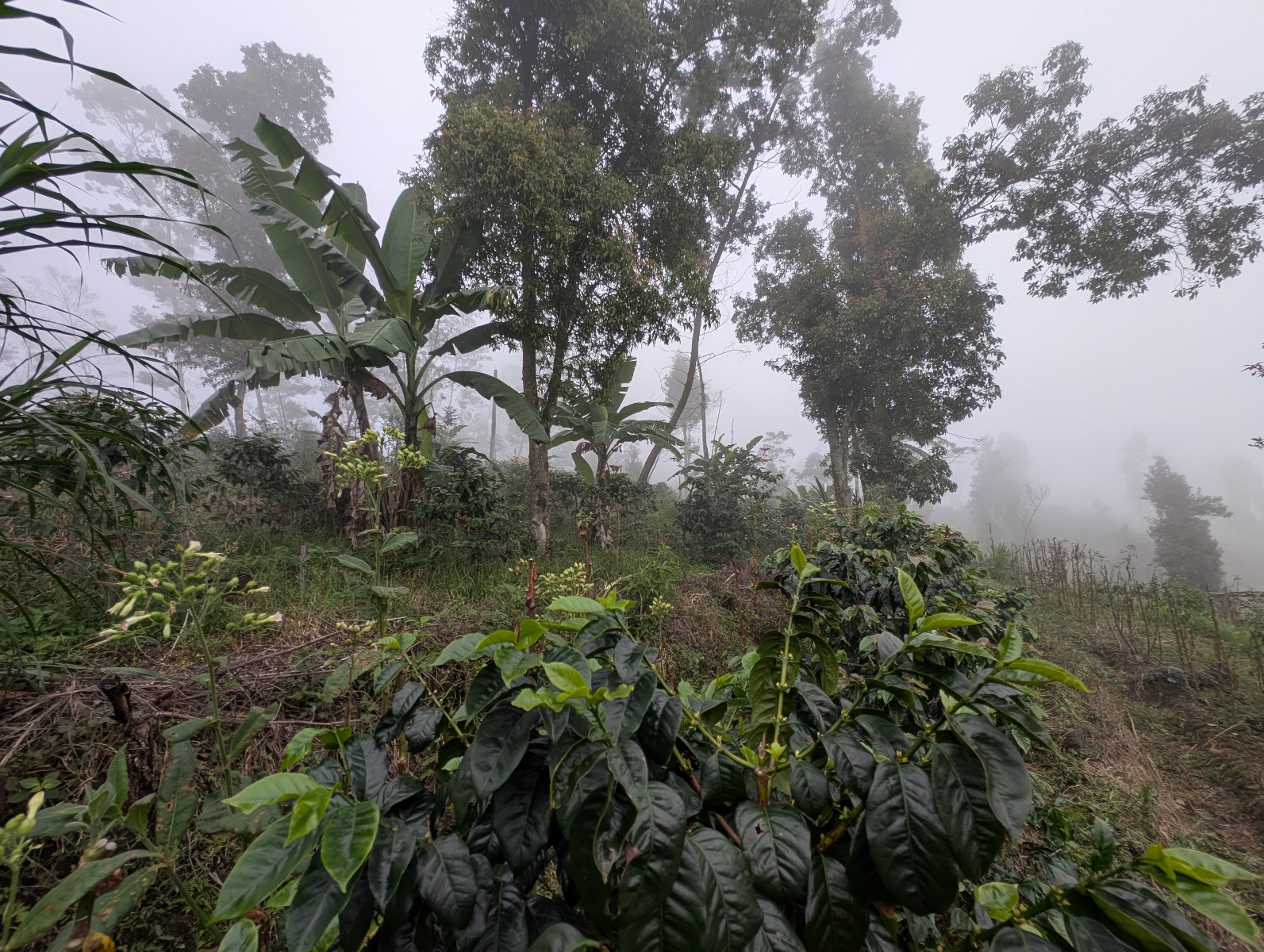
We continued on to Sunda Tilu, in western Java, not far from Bandung. A big city, but the further you travel, the quieter and smaller-scale it becomes. Sunda Tilu is a group of farmers led by Assep Rukman. A man who does his work with attention and policy. He has several coffee plantations and has grown quietly in recent years. Among other things, with the purchase of a new plantation at 1,700 meters altitude. A deliberate step that suits how he runs his business. Step by step. Without haste.
Asep works with washed coffees, with special lots and with giling basah, semi-washed wet hulled. Since we take his coffee, he has been producing more washed coffees. That fits better and also earns him more. You can see that care in the cup. The coffees are bright and clean, with lots of detail in the flavor profile. The acidity is refined and balanced. Just really good coffee.
Tasting is not the work. Choosing is the work.
Of course there's cupping. Tables full of cups. With Adri and Wahyu from the cooperative. But cupping here is not a checklist but a conversation. Why do we taste what we taste? And what's behind this? Of course with a sip of water here and there to rinse the pallet. Since this was not the harvest period in Java, we tasted mostly earlier harvests and coffees that were already established. But that was not to spoil the fun; triple fermentations . Experimental lots. Even Robustas that are getting better and better as Arabica gets tougher in the climate. The nice thing about this kind of coffee research is that you not only buy more consciously and sustainably but you can already dream of what more can be done at a later date.
Culture and deals go hand in hand....
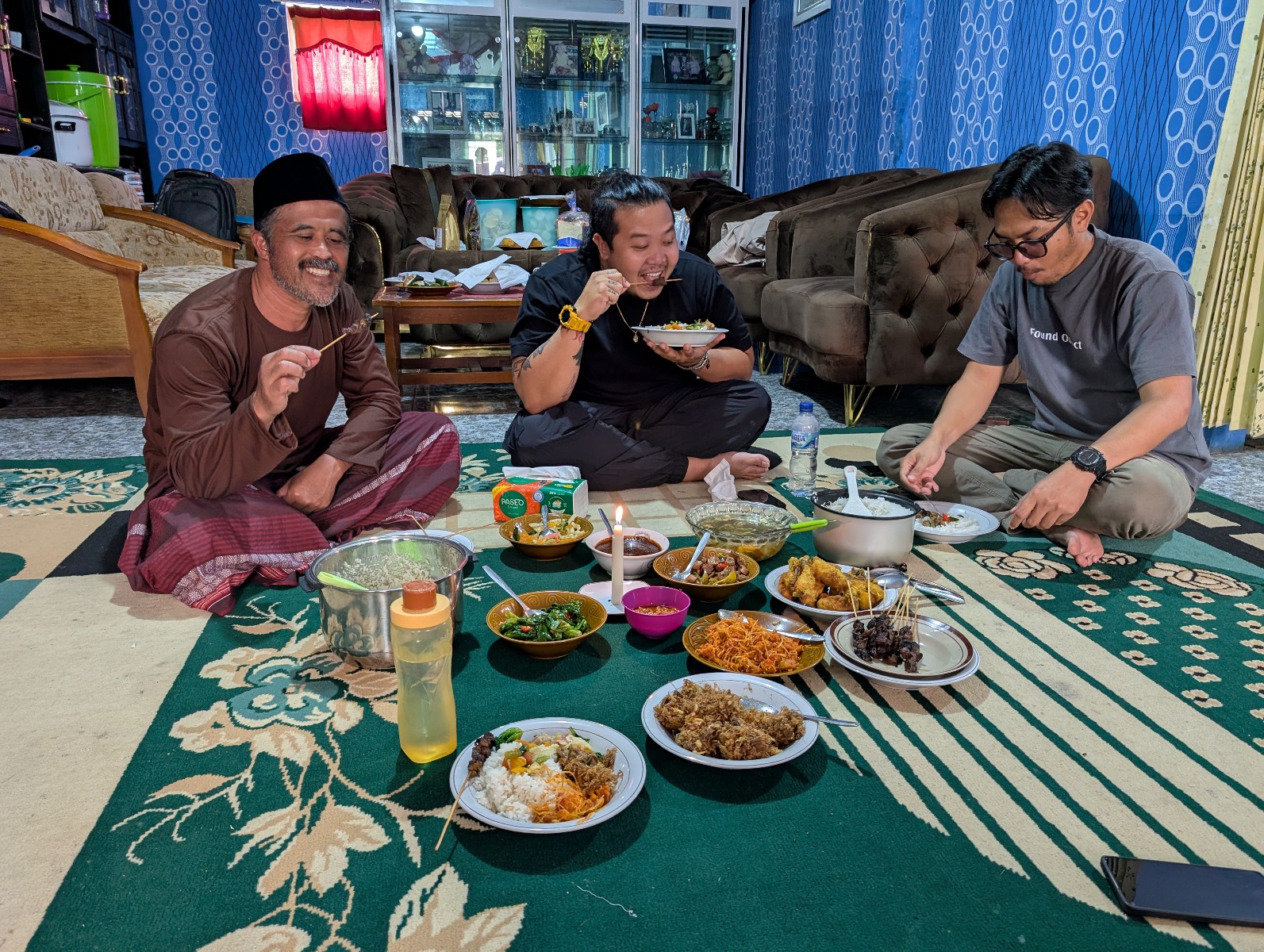
In Java and Sumatra, food is not a break from work. It ís work. The day here is divided not just around appointments but around fixed moments of rest. Prayers are said five times a day. This is also reflected at the table. Breakfast is hot. Lunch is extensive. Dinner is rarely rushed. Where we in the Netherlands plan for half an hour, here they quietly take an hour and a half. Not because no one is in a hurry but because eating together is part of how you build trust. BOOT stands for a good relationship with our farmers, one that goes beyond knowing each other's names and faces but seeks depth by being open to learning and recognizing what craftsmanship coffee really is. In the Netherlands, we make a deal and then go out to dinner. Here, it works the other way around. Those who are too quick to start talking about volumes and prices miss the point. Moving along (eating, waiting, listening) creates space. For more honest conversations. And, ultimately, for better decisions about coffee.
The disaster in Sumatra
While traveling in Sumatra, I found myself in the middle of a major flood disaster: days of rain, landslides, closed roads and villages isolated. Coffee could not dry, harvests were at a standstill and at the same time I saw up close how Ketiara and the community cared for each other - with shelter, food and peace, while everything was uncertain. It was confrontational, impressive and defining for how you look at coffee. About this period and what it did to the people there, I will tell more in detail in the next blog....
Why we keep going
Perhaps what sticks with me the most is how natural community is here. Ketiara and Rahmah (leader of Ketiara) take care of their people. In times of need, there is sharing. Food, things, attention. Less me. More together. This is a far cry from how individualistic we often organize things. And that's exactly where it touches on why we keep making these trips. Not to collect stories. Not to put check marks. But to stay sharp. To keep testing whether what we do is still right. To deepen relationships and keep questioning choices. The next time you drink a cup of BOOT coffee, you won't see any of this. But it's in there. In the attention. In the waiting. In sometimes consciously not choosing. And ultimately: in the taste.